
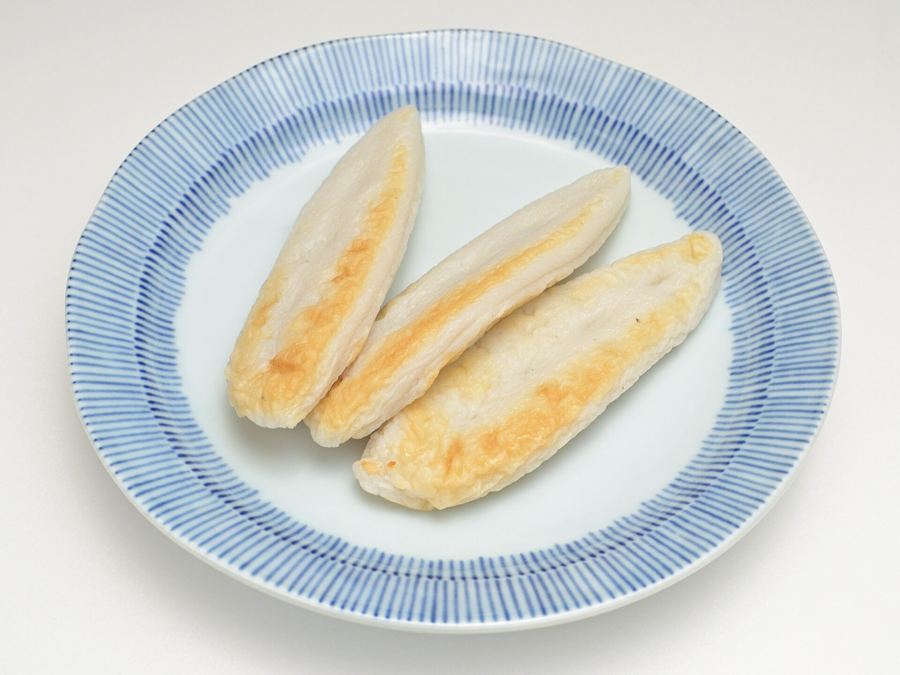
Where the question comes from
Both products start as ground fish and both can end up inside a fish cake or a fish ball. On a Vietnamese processor's floor, the two run on separate lines, sit in separate cold stores and ship under different spec sheets. On a buyer's spec sheet the two are often confused, and the confusion costs a sample round. This note sorts the two apart in a way an importer can use at the quote stage, written from the frozen export side rather than the retail recipe side.
FROKO18 is a trading and export company in the Mekong Delta. We quote frozen pangasius as a raw material, pangasius surimi in 10 kg blocks and 1 kg retail bags, and finished fish cake and breaded pangasius. The surimi side sits on our Vietnam surimi exporter page, the finished side on our Vietnam fish cake supplier page.
What surimi actually is
Surimi is a washed, stabilised white fish paste designed to behave as a base ingredient and to hold protein function through frozen storage. The processor minces white fish fillet, washes the mince in cold water through several cycles to remove fat, blood and water-soluble proteins, dewaters it, blends in cryoprotectants (usually sugar and sorbitol) to protect the proteins at -18°C, and freezes the result in blocks. The output is a pale, mild paste the factory then defrosts, works with salt and seasoning, shapes, cooks and freezes again as the finished item.
If you are starting the surimi conversation and the grading questions are new, read Surimi grades explained for first-time buyers alongside your reference block.
What "fish paste" means in different markets
Fish paste is a broader term and it travels under different meanings on different shelves. In Southeast Asia, fish paste often means a seasoned, ready-to-cook mince sold in a tub or a vacuum pack. The processor minces the fish, may skip the heavy washing, mixes in salt, starch, pepper and sometimes garlic or chilli, and chills or freezes the paste for near-term use in soups, hot pots and fried patties. In European and North American use, "fish paste" more often means a cooked, savoury spread for toast, which is a different product with little to do with this conversation.
Across markets, the Vietnamese export convention is practical. Surimi means the washed base. Fish paste on an export spec usually means a minced, often seasoned product, sometimes frozen as a block, sometimes packed in retail tubs or bags. The exporter and the buyer confirm the definition in writing before any sample moves.
Processing differences, step by step
The differences live in a handful of steps on the processor's floor.
Washing cycles
Surimi gets several washing cycles with cold water, each cycle removing fat, blood and water-soluble protein. A plain fish paste is often not washed, or is washed lightly for appearance only. Washing is what gives surimi its pale colour and its longer frozen shelf life.
Cryoprotectants and frozen stability
Surimi is designed to live at -18°C for months without losing gel function. The cryoprotectant blend holds the protein structure through freezing. A fish paste intended for near-term use may skip or reduce the cryoprotectant step, which lowers the frozen shelf life.
Seasoning on the line
Surimi is unseasoned at the block stage. The buyer's factory adds salt, starch, egg white and flavour during its own line. A seasoned fish paste carries the seasoning already, and the buyer's downstream step is shorter.
What the differences do to the final product
Those processing choices show up on the shelf. Surimi reaches a firmer gel strength, a cleaner whiteness and a lower impurity count, which is why it is the base for imitation crab stick, kamaboko and premium fish balls. A seasoned fish paste is softer, more flavoured and faster to use, which is why it sits well in soup balls, dumpling fillings, patties and sausage-style blends. The two are not better and worse. They are tools for different jobs. Where the end product needs to hold a tight fibre pattern after cutting, surimi wins. Where the end product sits in broth or inside a dumpling, the plainer, seasoned paste often works and ships at a lower price per kilogram.
Side-by-side comparison
The table is a working summary. Any single row can bend to a buyer's spec with a trial run and a written lab sheet.
| Field | Surimi | Fish paste (seasoned mince) |
|---|---|---|
| Washing cycles | Several, in cold water | None or light |
| Cryoprotectants | Yes, standard for frozen storage | Often reduced or skipped |
| Seasoning | None at the block stage | Added on the line |
| Colour on the block | Pale | Grey to tan, depending on fish and spice |
| Gel strength | Set to a target range | Lower, not usually tested for gel |
| Frozen shelf life | Longer, held at -18°C | Shorter, often sold chilled or near-term |
| Typical end products | Crab stick, kamaboko, premium fish ball | Fish patty, soup ball, dumpling filling |
| Pack format for export | 10 kg block, 2 blocks per 20 kg carton; 1 kg retail bag | Retail tub, flow bag or seasoned block, per order |
| Price point | Higher per kilogram | Lower per kilogram, by convention |
Which to put on the spec sheet
Pick by the step you want to own in-house. If your factory shapes, cooks and freezes under its own brand, order surimi and run the recipe yourself. If you want a ready-to-cook mince that you only need to form and heat, order a seasoned fish paste or a finished fish cake. For the finished product shaped and seasoned in Vietnam, our fish cake supplier page is the right next read; for the raw material behind both, see Vietnam pangasius exporter.
Where a buyer is still deciding, we usually propose a short sample flight: a stock surimi block, a seasoned paste sample and a finished fish cake sample from the same processor. Three samples, one shipment, one conversation. If this is your first container of this family of products, the step-by-step walk-through sits in How to import frozen fish cake from Vietnam.
Not sure which one belongs on your spec sheet?
Send the reference product and the destination port. We propose a sample flight and a draft spec sheet inside a working day, Vietnam time.
Ask for a quoteFAQ
Is surimi the same as fish paste?
They overlap but they are not the same. Surimi is a stabilised, washed white-fish paste designed to hold protein function in a frozen block. Fish paste in general use is a broader term for minced or ground fish that may or may not be washed, and is often seasoned and sold ready to cook. On a spec sheet, surimi means the washed base, and fish paste usually means a seasoned, ready-to-use mince.
Why does surimi cost more than a seasoned fish paste?
Surimi carries extra steps: multiple washing cycles, dewatering and a stabiliser mix for frozen storage. A seasoned fish paste skips most of the washing and is often sold refrigerated for near-term use. Those extra surimi steps give a cleaner colour, longer frozen shelf life and the gel strength that lets factories shape finished products like crab stick and kamaboko.
Can I use fish paste to make a crab stick?
Not reliably. Imitation crab stick, kamaboko slices and premium fish balls lean on the gel structure that comes from a washed surimi, not a plain mince. A seasoned fish paste works well for soup balls, patties, dumpling fillings and sausage-style blends where the final seasoning dominates and the texture is softer. Match the material to the end product rather than to the lower price.
Is Vietnamese fish cake made from surimi or from fish paste?
Both approaches exist. A finished fish cake can be built from washed surimi, from a minced fish paste, or from a blend of the two. Processors in Vietnam work to the importer's recipe, so a buyer who specifies the base, the seasoning and the shape will get a consistent product. The ratio and the base are agreed in writing before the sample loop starts.
How is surimi packed for export compared with fish paste?
Pangasius surimi for export usually ships as a 10 kg block in a printed polybag, two blocks per 20 kg master carton for factory buyers, with a 1 kg printed retail bag available for supermarkets. Finished fish cake or seasoned fish paste products ship as retail trays, flow bags or food service polybags inside master cartons shaped to the destination's pallet rules.
Which should go on a first spec sheet?
If you are a factory that will shape and cook the finished product under your own brand, you want surimi. If you want a ready-to-cook mince that you only need to form and heat, you want a seasoned fish paste or a finished fish cake. The decision follows the production step you want to own in-house.