
Why surimi grades matter at the quote stage
Grades are the shorthand factories use to describe the base paste on a surimi carton. A first-time buyer who asks for "food grade surimi" and leaves the rest to the exporter is likely to end with a block that cooks differently from the reference tasted. Surimi is a stabilised fish paste, and the properties that matter on the finished product sit on continuous scales. A grade name wraps a bundle of those scales into a single tag; agreeing the tag without agreeing the ranges behind it is where first containers run into trouble.
At FROKO18 we work with surimi processors in the Mekong Delta and quote pangasius surimi in 10 kg blocks for factories and 1 kg retail bags for supermarkets. The format and loading plan sit on our Vietnam surimi exporter page. This post is the companion read for the grade conversation that happens before the first block is cut.
The three measures behind every grade
Most surimi grading schemes combine three measures. Gel strength tells you how firm the cooked surimi will be. A technician cooks a short cylinder of the gel and presses a probe into it until it breaks; the reading combines the force at break and the deformation before break. Whiteness is read on a reflectance scale off a cooked gel of a set shape. Impurity count is a visual check on specks of skin, bone or dark tissue in a thin slice.
Alongside those, the lab reports moisture, pH and crude fat. Moisture affects the gel; pH shifts with washing cycles and freshness; higher fat in the base paste tends to reduce whiteness and soften the gel. A grade name without those values is a shelf label, not a specification.
Whiteness is a cooked reading
Whiteness is read off a cooked gel because the raw paste reads grey against reflective paper and does not predict the finished shelf colour. A buyer who checks the raw block under store lighting usually gets a false signal; the correct read is on the cooked slice of the same lot.
Impurity count is a visual tolerance
Impurity count tallies dark specks in a thin surimi slice at a set area and background. It is a visual tolerance for finished product appearance, not a food safety number. Food safety sits in the microbiology and residue lab sheet, shared with the quote.
Why one processor's grade is not another's
Two processors can both ship a carton stamped "SA" and sell blocks that behave differently in your mixer. The names are internal shorthands, built against each plant's own washing cycles, raw fish and lab method. Even within one factory, seasonal shifts move the ranges a little month to month. For a first-time buyer: treat a grade label as a tag on a bundle of agreed ranges in your purchase order, and test the sample against those ranges rather than against the label.
End use first, grade second
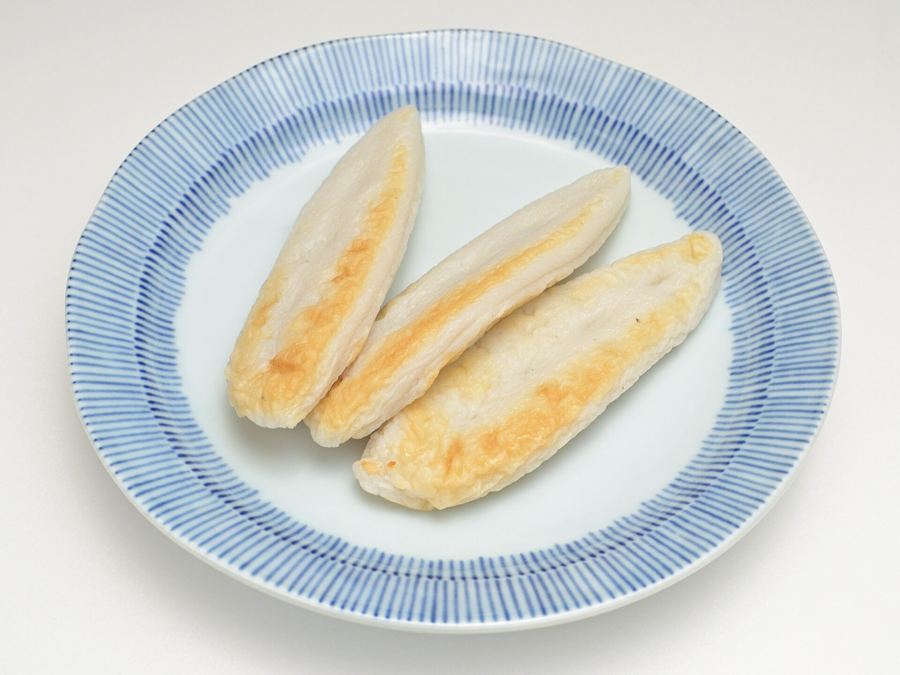
The grade follows the end product. Imitation crab sticks need a surimi that holds a tight fibre pattern and reads clean on a thin slice, so gel and whiteness both matter. Kamaboko and chikuwa style slices need firm gel and good whiteness. Fish balls for soup can usually work on a mid grade. Fish patties and sausage style blends can usually work on a lower grade because the final mix carries more of the weight.
For how surimi becomes the finished item on your shelf, our Vietnam fish cake supplier page covers shapes, seasoning and private label. For a comparison between pangasius and other white fish species as the raw stock, read Pangasius vs other whitefish for fish cake and surimi.
Indicative grade and end-use table
The table below is a starting map. It is a conversation prompt, not a locked specification. Every row is agreed per order against your reference and your target market, and the exporter proposes ranges in writing.
| Common end product | Gel strength target | Whiteness target | Impurity tolerance |
|---|---|---|---|
| Imitation crab stick | Higher range for the recipe | Higher range | Low tolerance |
| Kamaboko slice, chikuwa | Higher range | Higher range | Low tolerance |
| Fish ball for soup, hot pot | Mid range | Mid range | Mid tolerance |
| Fish cake, breaded cake | Mid range | Mid range | Mid tolerance |
| Sausage style blend, filler | Lower range acceptable | Lower range acceptable | Higher tolerance |
| Snack coating, extruded chip | Lower range acceptable | Lower range acceptable | Higher tolerance |
Where pangasius surimi sits on the map
Pangasius surimi reaches a working range of gel strength and whiteness for most of the end products listed above when the processor controls the washing cycles, water temperature and dewatering time. The exact numbers depend on the plant and the season, which is why we do not publish fixed figures. For a cleaner, firmer bite than pangasius reaches alone, the processor can blend pangasius with another white fish surimi on your ratio; the blend is agreed in writing, a trial goes through the lab, and the result travels with the sample.
How to agree a grade in writing
A grade conversation that lands quickly follows a short script. Name the end product and the market. Send a reference block, a spec sheet or a photograph of the finished item you want to match. Ask the exporter to propose a target gel strength range, whiteness range and impurity tolerance, with the lab method named. Confirm moisture, pH and fat ranges on the lab sheet, and agree the slab format and the master carton. The agreed ranges go on the purchase order and on the first lot's lab sheet, so a later lot that drifts has a document to stand against.
Have a reference and a target market?
Send the reference block or spec and the destination port. We reply with a proposed grade range inside a working day, Vietnam time.
Ask for a quoteFirst-time mistakes to avoid
The first mistake is treating grade labels as universal. The second is skipping the pre-production sample and ordering on the first stock taste. The third is approving a sample without the lab sheet, which hides the gel and whiteness numbers behind a short note. The fourth is choosing a grade higher than the recipe needs, which raises cost without changing the shelf result. If none of these come up on the first call, raise them yourself.
FAQ
What do surimi grades actually measure?
Surimi grades combine three measures: gel strength (how firm the cooked product will be), whiteness (how pale it reads on the finished item) and impurity count (how clean the paste is). Moisture, pH and fat are tested alongside and recorded on the lab sheet. The grade name is a shorthand each processor uses to tag a bundle of ranges.
Why do grade names from two processors not match?
Each plant sets its own names against its own washing cycles, raw fish and testing method. One factory's SA may read like another factory's A, and whiteness scales differ because the test is run on a cooked gel of a particular shape and set time. A grade label is a working shorthand, not a universal rating.
Is a higher grade of surimi always better?
Not for every end use. Imitation crab and kamaboko usually need higher gel and whiteness. Fish balls for soup often work with a mid grade, and seasoned fillers work with a lower grade because the final seasoning dominates. Paying for a higher grade than the recipe needs raises cost without changing the shelf result.
How do you measure gel strength?
The standard test cooks a surimi gel of a set shape, usually a short cylinder, and presses a probe into it until the gel breaks. The reading combines the force at break and the deformation before break. Different labs use slightly different sample sizes and probe speeds, so numbers from two labs do not always align.
Where does pangasius surimi sit on the grade map?
Pangasius surimi reaches a working range of gel and whiteness suitable for a wide set of end products when the washing cycle and temperature are controlled. The exact target depends on the processor and the season. Where a recipe asks for a cleaner, firmer bite than pangasius reaches alone, the processor can blend pangasius with another white-fish surimi on the ratio set by the buyer.
How should a first-time buyer specify a surimi grade?
Describe the end product first, send a reference block or spec sheet, and ask the exporter to propose target ranges for gel strength, whiteness and impurity count. Agree the ranges in writing, test a sample from the production line, iterate once if needed, and keep the agreed numbers on the quote and the first lot's lab sheet.