
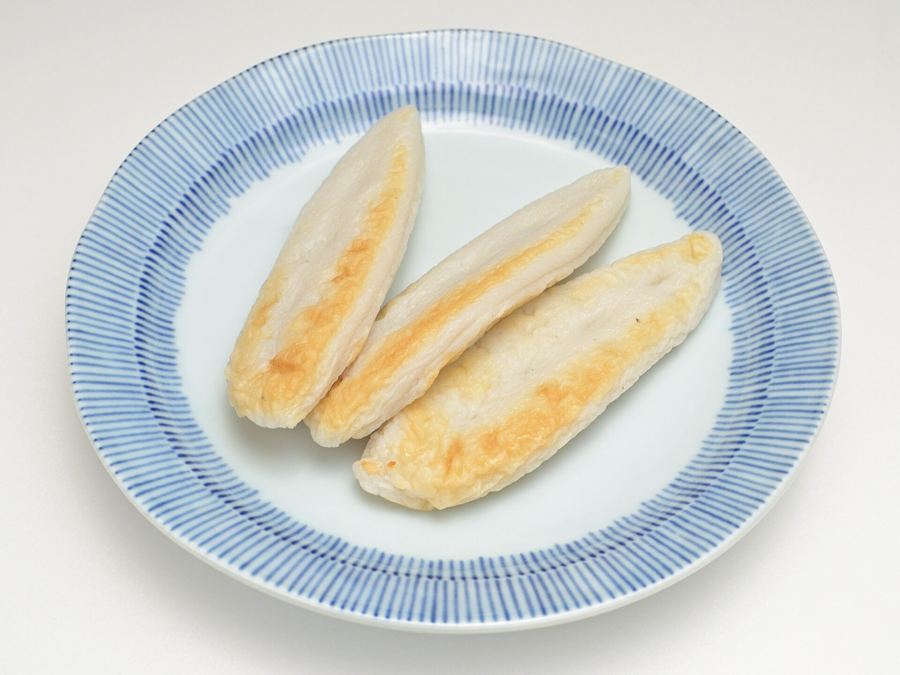
Private label surimi sits in an awkward spot between a commodity and a bespoke product. The base fish paste is standardised, but the grade, the gel strength and the carton label change with every brand. For a Vietnamese exporter, the question an importer sends in week one is almost always the same: how little can I order, how long does it take, and can I share a container with other items? The answer below is a working one, drawn from how pangasius surimi actually ships from the Mekong Delta.
What private label surimi really means
Private label surimi is pangasius surimi produced to the importer's grade, with the importer's brand on the master carton and the importer's spec sheet in the file. The paste inside is still pangasius surimi. The processor runs the same line that produces its generic export output and switches the carton artwork and the inner bag at the pallet level. For an importer who wants a differentiated product, the real levers are grade and gel strength rather than the recipe of the paste, because the paste is a base. The recipe lives in whatever is built on top of the surimi, such as fish cake or fish balls.
A plain MOQ table
Most importers ask for a single MOQ figure. In practice MOQ depends on three things at once: the grade, whether the carton is a stock or a custom artwork, and whether the order sits inside a shared reefer. The table below shows typical ranges. The exact MOQ for your order is agreed with the quote.
| Order shape | Typical starting point | Notes |
|---|---|---|
| Stock recipe, stock carton, shared reefer | A few tonnes | Fastest to produce. Lowest MOQ. |
| Stock recipe, private artwork, shared reefer | Pallet set or two | Needs a printed artwork proof. Short delay. |
| Dedicated grade and private artwork, shared reefer | Larger pallet set | Line stop for the grade. Lead time longer. |
| Full 40 ft reefer, private artwork | About 24 to 27 tonnes net | Common for repeat buyers. Efficient per kilo. |
The temptation is to push for the smallest tonnage possible. The cheaper move for a growing brand is to pick the quantity that fits inside one shared reefer with other items you also need, such as fish cake or breaded pangasius. The arithmetic favours fewer, better planned shipments.
How a surimi carton stacks on a pallet
Pangasius surimi is normally block frozen in 10 kg blocks, two blocks to a master carton of 20 kg. The blocks are interleaved with food-grade film to protect the surface. Carton dimensions sit around 60 by 40 by 10 cm, which gives a tidy pallet with the right strap set and a stable height. A standard export pallet carries ten layers of eight cartons, around 1.6 tonnes gross. The exact layout follows the processor's cutter guide. A pallet height that fits the reefer plenum needs to leave room for air circulation, so planning the layout before carton artwork is finalised avoids a late repack.
Grades and gel strength set per order
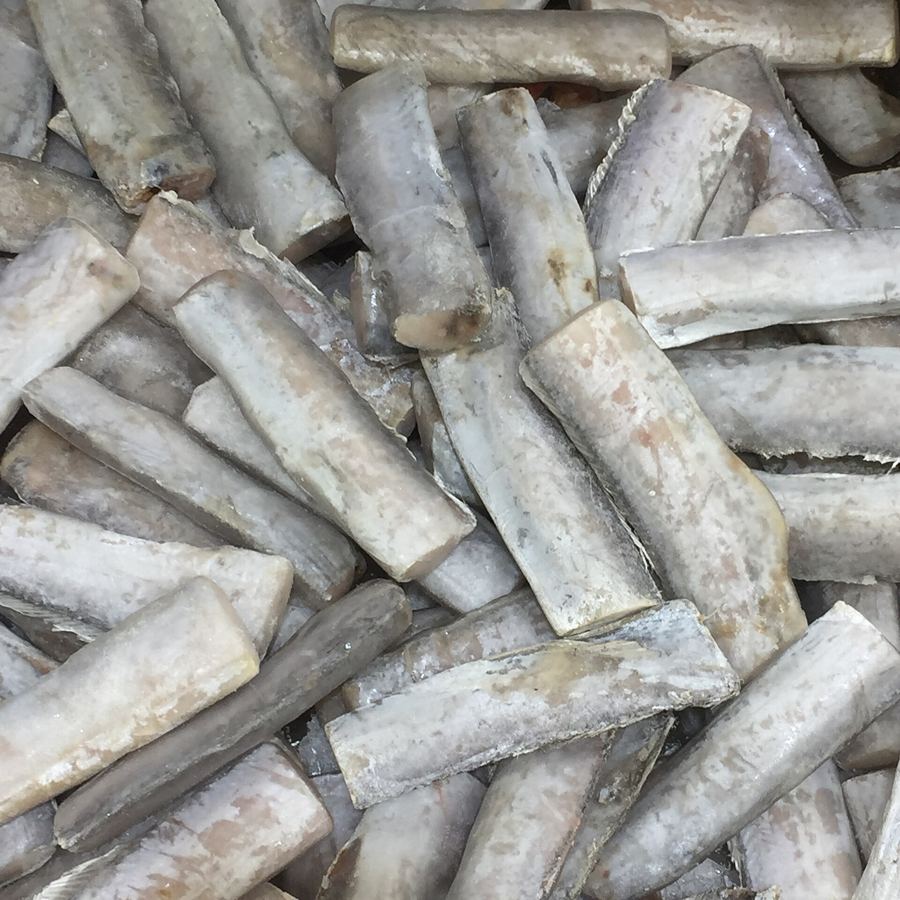
Surimi grades are usually distinguished by colour (whiter is higher), odour (cleaner is higher) and gel strength measured by a texture analyser. For pangasius surimi, higher grades go into premium kamaboko and crabsticks, mid grades into fish balls and fish cake, and lower grades into fillers and processed meal components. A buyer who sets a gel strength target in the spec sheet usually gets a sample from the processor that matches, with a lab report. Importers that skip this step tend to receive the processor's default, which may not match their downstream line.
Gel strength targets vary by use case. The processor can advise a target range if you tell them what the surimi feeds into. If you plan to produce fish cake yourself, the Vietnam fish cake supplier page covers the typical ranges and shapes.
When to share a container, when to fill one
A shared reefer costs more per kilo than a full one, because the fixed costs of the container and the cold chain are split across fewer kilos. A full reefer costs less per kilo but takes more capital to buy, more cold storage at destination, and more weeks to turn into cash. The practical rule for a mid-size importer is to share for the first two or three orders and to switch to full once the retail velocity is known. The exporter can model both options at quote stage so the per-kilo numbers are visible.
Artwork, labels and the first-carton approval
Private label stands or falls on the first master carton. The processor sends a cutter guide for the carton size. The importer sends print-ready artwork. The processor prints a proof. Both sides sign off in writing before the main print run. On the barcode, a hand scanner test on the proof catches most issues before anything leaves the plant. For food service bulk, plain export cartons with lot stickers are often enough and skip the artwork step entirely.
Have a surimi grade and a tonnage in mind?
Send the target grade, carton style and destination port. We come back with a shared and a full container option, side by side.
Ask for a quoteFAQ
What is a reasonable MOQ for private label surimi from Vietnam?
For a stock recipe with existing cartons, a few tonnes within a shared reefer is often workable. For a dedicated recipe and new artwork, a pallet set or more makes the production run efficient. A full 40 ft reefer holds about 24 to 27 tonnes net depending on glaze and packing. The exact MOQ is agreed per order.
Can we share a container with fish cake and breaded pangasius?
Yes. Seafood items commonly share one reefer. Pallet sets for surimi, fish cake, breaded pangasius and frozen fillets can be loaded in the same container at the same -18°C set point. Durian is loaded in its own container because the smell carries.
How does surimi pack for export?
Pangasius surimi is usually block frozen in 10 kg blocks, two blocks per master carton, interleaved with film. Pallet layouts depend on the carton dimensions. Both the block weight and the pallet height are set in the specification.
Can the surimi grade and gel strength be set per order?
Yes. Pangasius surimi is produced in grades distinguished by colour, odour and gel strength. Each grade has its typical use in fish cake, fish balls and ready meals. Gel strength targets are set per order and verified in the lab.
How do we put our brand on the surimi carton?
Private label artwork is sent to the processor, a printed proof is signed off by both sides, and the first master carton is approved before the production run. For bulk food service use, plain export cartons with lot stickers are common.
How does lead time compare for a shared container vs a full one?
A shared container often slots into an existing loading plan and can be faster to produce. A full container of custom surimi may need a longer window to clear a production slot and run new artwork. Both options are quoted with a dated lead time.