
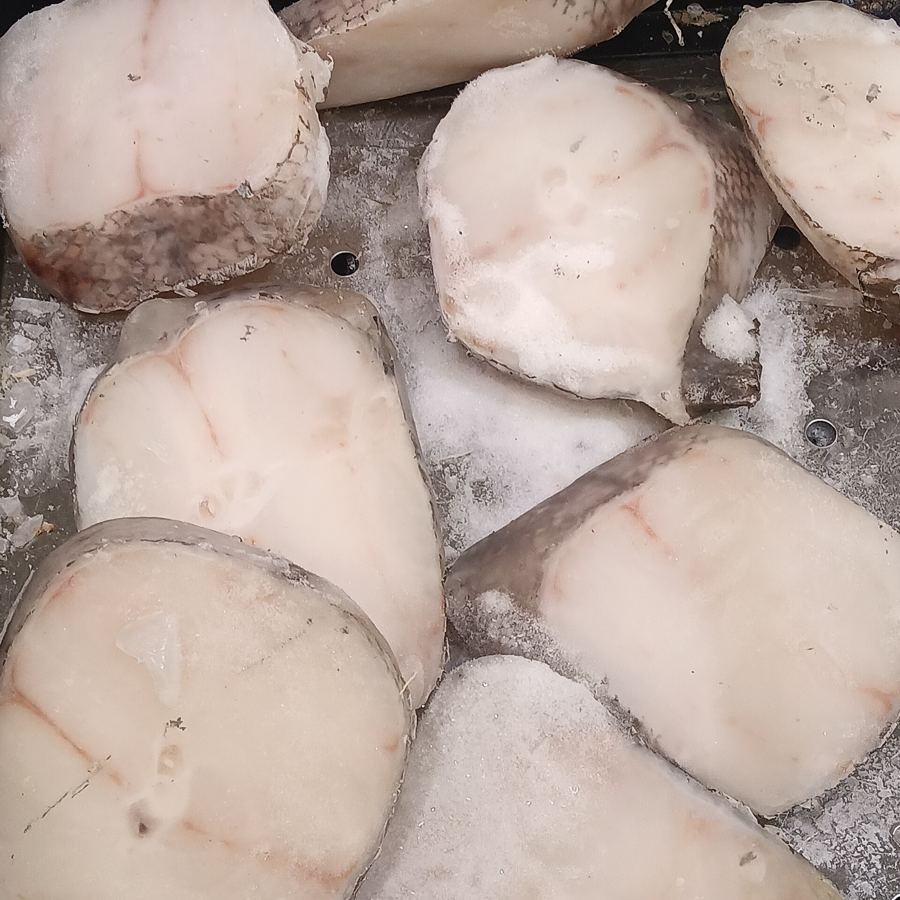
Most of the disputes we see on a first frozen pangasius container are not about taste or microbiology. They are about glaze. Glaze is a thin coat of water or dilute brine applied to a frozen fillet to form an ice layer on the surface. The layer protects against oxidation and freezer burn through cold storage and shipping. It is helpful. It is also water, not fish. If a buyer pays for twenty tonnes net and the net on the carton includes the glaze, somebody feels short-changed when the fillets thaw. The question is how much glaze, what counts as the net, and how both sides agree to measure the glaze before the reefer leaves the processor. For the wider raw-material picture, see pangasius exporter Vietnam.
What glazing does on a fillet
Glaze is applied by dipping or spraying the fillet in cold fresh water or a mild salted solution immediately after blast freezing. The water hits the cold surface, freezes, and leaves a glass-like layer that locks moisture in and keeps air out. The thicker the glaze, the longer the fillet keeps colour and texture through storage. A fillet with no glaze is vulnerable to freezer burn after a few weeks in cold storage. A fillet with a very thick glaze looks heavy, drips a lot of water on defrost and can lose shape at the edges.
Glazing is normal. Buyers in every market we work with accept some level of glaze on frozen pangasius fillet because the alternative is a dry-edged fillet on the retail shelf. The point is to agree the level in writing and then price and weigh against that agreed level, not against a default the processor runs for a different buyer.
Common glaze levels in frozen pangasius
Processors in Vietnam run glaze bands to the importer's request. The common bands are around 10%, around 15%, around 20%, and a heavier coat at 30% or more. The percentage is the mass of water added relative to the total weight of the glazed fillet. A 20% glaze means twenty grams of ice water for every one hundred grams of glazed fillet, so the fish mass is eighty grams.
A clean export fillet to Western Europe or Australia often sits in the 10 to 20% band on retail boxes. Food service buyers who care most about yield after cooking sometimes ask for 10% or lower. Buyers who buy on a weight-only basis without reading the glaze line sometimes end up with 30% or more by default and spend a long email thread trying to understand why their cases felt heavy and the fillets looked small on the plate.
Net weight versus gross weight on the carton
Here the paperwork needs care. On an export carton of frozen pangasius fillet, three weights come up. The gross weight is the full carton including the fillets, the glaze, the inner bag, the carton itself and sometimes the dunnage. The net weight is the weight of the glazed product inside the carton. The net weight after deglazing, sometimes called the fish-only weight, is the weight of the fillet with the ice layer removed. The three numbers describe different things, and they are not the same number.
European retailers often ask for the drained net weight after a controlled thaw, so that the label on the retail pack is the fish mass the consumer actually takes home. The processor can quote on either basis, but if the buyer and the processor are working from different bases, somebody is paying for a lot of water and does not know it. Twenty tonnes net of 20% glazed fillet is sixteen tonnes of fish. Twenty tonnes of fish net needs twenty-five tonnes of 20% glazed product. The arithmetic looks simple on paper and still surprises buyers on a first container.
How to spec glaze in the quote
Three questions settle most of the ambiguity. The first is the glaze percentage, written as a nominal with a tolerance, for example "15% glaze, nominal, with plus or minus two percentage points on the lot average". The second is the net weight basis, either glazed net or fish-only net, written out in full. The third is the test method, typically a controlled thaw of a set number of cartons in cold running water, drained for a stated time on a mesh sieve, and the fillet re-weighed on a calibrated scale.
The exporter writes all three into the pro-forma invoice and the specification sheet. On production day the QC team records the pre-glaze weight and the post-glaze weight on a sample of cartons from the line and keeps the record with the lab file. If a question surfaces at destination, both sides look at the same production record rather than at memory.
Measuring glaze at destination
A buyer who wants to check glaze at destination needs a chilled area, a mesh sieve that lets water run off, and a calibrated scale. The method most laboratories use follows the same sequence. Three cartons are picked at random from different pallets, weighed closed, opened, and the fillets placed on the sieve. Cold potable water runs over the fillet until the ice coat is gone and the water running off reads clean. The fillets drain on the sieve for the time agreed in the specification, typically a minute or two, and re-weigh. The weight loss divided by the first fillet weight gives the glaze percentage on that carton. The average across the three cartons gives the lot result. Agreed methods and tolerances make almost all glaze disputes disappear before they start. For how the chain behaves on the sea leg, see our note on -18°C cold chain checks.
Where glaze and net weight go wrong on a first container
Five mistakes repeat often enough to be worth naming. The quote states "net weight 20 tonnes" without saying whether the basis is glazed or fish-only. The glaze percentage is agreed verbally and never written down. The glaze band on the line is set to the processor's default rather than the agreed band, because nobody rewrote the setting. The destination lab uses a different thaw time to the processor's method, and the two readings land two or three percentage points apart. None of these are worth the week of email after a container clears customs. For the loading step on which this all rests, our page on Vietnam fish cake supplier covers the shared container plan when pangasius loads with other seafood items.
Want a quote with a clean glaze line?
Share the destination port, the pack size and the glaze band you want. We return a spec sheet and a sample plan inside a working day.
Ask for a quoteFAQ
What glaze percentage is standard for frozen pangasius fillet?
Retail-grade fillet usually sits in the 10 to 20% band, and food service buyers often ask for 10% or lower. The processor can run higher levels when the buyer asks. The percentage is agreed per order and written into the quote.
Does the net weight on a carton include the glaze?
It can be either glazed net or fish-only net. The two sides must agree the basis in writing before the production day. Our standard quote states the basis so the invoice and the carton labels match.
How is glaze percentage measured at destination?
A set number of cartons are weighed, the fillets are rinsed with cold water on a sieve until the ice coat is gone, drained for the agreed time and weighed again. The weight loss divided by the first weight gives the glaze percentage. Both sides agree the thaw time in the specification.
Does glaze protect the fillet or just add weight?
Both. The ice coat shields the surface from oxidation and freezer burn through storage and shipping, and it adds mass. The point is to agree a level that gives sensible shelf life without carrying unneeded water.
Can I ask for a very low glaze on pangasius fillet?
Yes. A low glaze suits food service buyers who want higher cooking yield. The storage window is tighter and any temperature excursion is more likely to show on the surface. The specification reflects the choice.
Will the exporter share the production weight record?
Yes. The QC team records pre-glaze and post-glaze weights on sample cartons and files them with the lab result. The record travels with the shipping documents so both sides can look at the same numbers if a question comes up.